
Creating The Circular Carbon Economy
Roadside Verge and Green Area Maintenance for Highways and Public Green Spaces
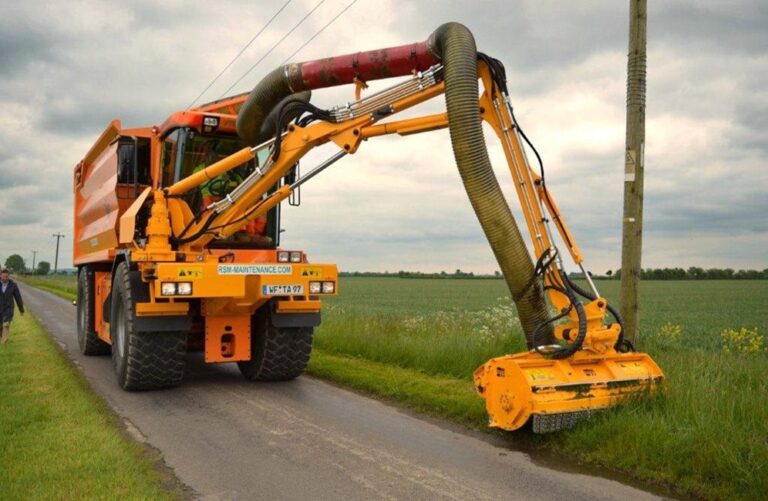
Grass, weed and tree growth on the side of roads has to be controlled for safety reasons. Leaving grass mulch and wood chips in place can sometimes be undesirable. Grass mulch creates a high-nutrient soil in which wild flowers will find it hard to compete with grasses. Piles of woodchip can encourage honey-mold fungus and be a home for pest species.
- Fact Sheet
- Calculator
- Co-Benefits
- More Information
Alternatively, green cuttings can be removed from the site and used for biogas production, and woodchip can be removed, dried and converted to biochar. Some equipment can be also collect chip from hedge trimmings. Obviously, there is a cost to transporting this material and, over a certain distance, the carbon emissions from transport and pre-processing can exceed the saving from conversion to Biochar.
This means that smaller local conversion plants, or even containerised conversion plants which can be moved to a work site, can be of more value in economic and carbon terms.
Biochar can be used in new planting of roadside areas, or to provide filtration material for capturing pollutant from highway run-off. In some cases this can be more cost-effective than purchasing Biochar from an external supplier.
In the example below we will add an additional Carbon penalty of 10% to the correction factor to allow for additional transport and processing of the woody biomass before conversion.
Please be aware that the results shown at the calculator pages are more estimations than exact values.
They are ment to give you a first impression and give some numbers as basis for creating ideas.
Avoids waste and CO2 emissions. Woody material can make Biochar.