
Creating The Circular Carbon Economy
Using Biochar in Internal and External Wall Finishes
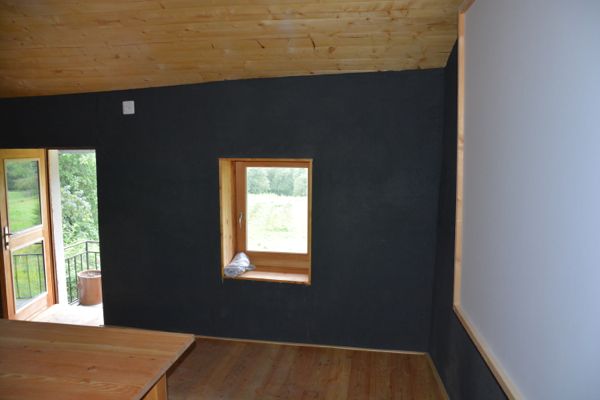
In recent years, there has been an increasing emphasis on improving the insulation of buildings to reduce energy use and CO2 emissionss.Whilst this has been successful in many newly constructed buildings, in many cases retro-fitting of older buildings has caused problems.
- Fact Sheet
- Calculator
- Co-Benefits
- More Information
In particular in tradionally constructed buildings with solid brick or stone walls, the apllication of modern insulation materials has often trapped moisture in the structure causing rot and decay and an unhealthy living environment.
In historic stone buildings, where modern waterproof cement renders have been used to replace traditional lime plaster, similar problems occur with the fabric of many buildings being damaged by trapped water that cannot escape. The use of tradional lime and clay plasters and renders avoids these problems as they are naturally ‘breathable’ and allow moisture to be absorbed and released slowly.
The addition of Biochar at up to 50% mixture to these materials increases the capacity of the wall surface to transpire moisture without adverse effects. This keeps the humidity of the internal air space between 40-70%. With less moisturein the internal air, less energy is required to heat it resulting in significant savings on heating costs.
Biochar is itself also an insulator and it inhibits the passage of electromagnetic waves.
Please be aware that the results shown at the calculator pages are more estimations than exact values.
They are ment to give you a first impression and give some numbers as basis for creating ideas.
Stops trapped moisture, natural humidity control, lowers energy demand, increases insulation