
Creating The Circular Carbon Economy
Urban Planting Rain Gardens
How Biochar Helps Improve the Integrated Management of Stormwater and Long Term Carbon Sequestration
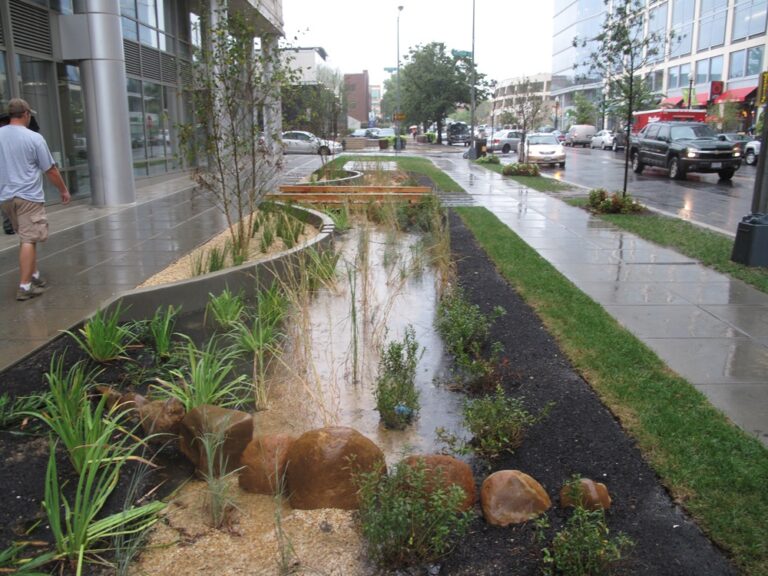
Biochar can be integrated imto a wide range of urban landscape designs to enhance their environmental performance. Used in swales, rain gardens, tree pits, or infiltration basins, it promotes natural water retention and purification, helping manage stromwater where it falls.
- Fact Sheet
- Calculator
- Co-Benefits
- More Information
Thanks to its highly porous structure, biochar stores and slowly releases water, improving infiltration and reducing runoff and flooding risks while filtering pollutants such as heavy metals and hydrocarbons.
On green roofs or within urban planting beds, Biochar improves soil fertility, structure, and resilience while reducing irrigation needs. By enriching often-degraded urban soils with organic carbon, it enhances aeration and root development, supporting healthier, more drought tolerant vegetation. These benefits extend the lifespan of plants and decrease maintenance costs, making landscapes both more robust andresource-efficient.
By combining water management, soil improvement, and carbon sequestration, Biochar contributes to the creation of more sustainable and climate-resilient green spaces. It supports a holistic approach to urban design that links hydrology, ecology. and livabiltiy – helping cities adapt to climate challenges while ofeering healthier, greener environments for their communities.
Please be aware that the results shown at the calculator pages are more estimations than exact values.
They are ment to give you a first impression and give some numbers as basis for creating ideas.
Water retention, reduction in plant stress, filtration of polutants before discharge.