
Creating The Circular Carbon Economy
Composting and Manure Treatment
How Biochar helps in the management of these materials
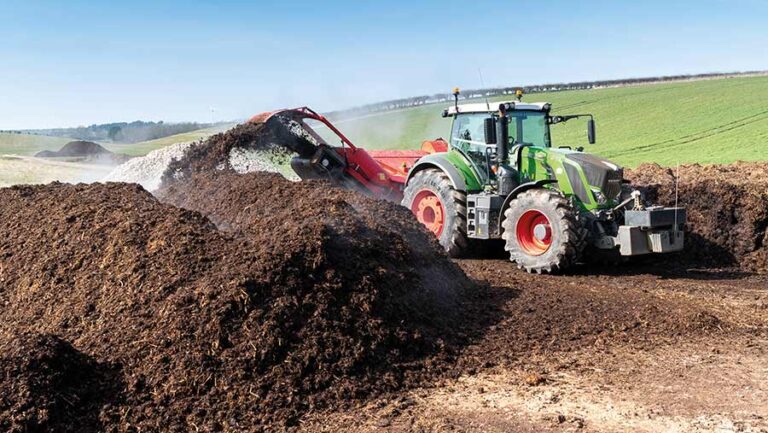
Biochar is an extremely effective and useful additive both for making compost and for managing farmyard manure from livestock. The great majority of the Carbon in the Biochar is in an inert form, meaning that it is not available to fungi and bacteria for them to metabolise. As such, it will not contribute to the Carbon/Nitrogen balance necessary for good aerobic decomposition.
- Fact Sheet
- Calculator
- Co-Benefits
- More Information
However, the micro-porous structure of Biochar together with its electro-chemical properties means that it will absorb Nitrgen compounds and bind them, reducing the release of ammonia and oxides of Nitrogen. This in turn means that not only are harmful emissions reduced, but the resulting material will have retained much of its Nitrogen for use by plants when integrated with soil.
Biochar can also be applied to animal bedding where it will reduce odour, and the incidence of harmful bacteria that can damage animal health, saving on vetinary costs.
The highest quality Biochar can be mixed into animal feed as a supplement where it will pass through the animal’s digestive system, promoting health and balance in the bacteria content of the gut and rumen.
Biochar-enriched composts and manures increase microbial and fungial action and retain moisture. Composts may actually increase in mass during maturation due to the increase in fungal biomass in the structure. Carbon Dioxide emission reductions cannot be claimed however, until the compost or manure is applied to soil.
Please be aware that the results shown at the calculator pages are more estimations than exact values.
They are ment to give you a first impression and give some numbers as basis for creating ideas.
Emissions reduction, nutrient capture, water retention, odour control